
Vermillion Marriage License Records
Marriage licenses are issued by the Vermillion County Circuit Court Clerk. Local clerk instructions require both applicants to appear, bring a driver license, and bring proof of how any prior marriage ended. If a prior spouse died, bring a death certificate. If a prior marriage ended by divorce, bring a certified copy of the divorce decree.
The clerk also states that the office does not officiate ceremonies. The license expires after 60 days, so timing matters. Indiana residents apply in a county where one applicant resides, while out-of-state applicants apply in the Indiana county where the marriage will be solemnized.
The Indiana Marriage License Public Lookup is a beta portal for many Indiana marriage records from 1993 to present.
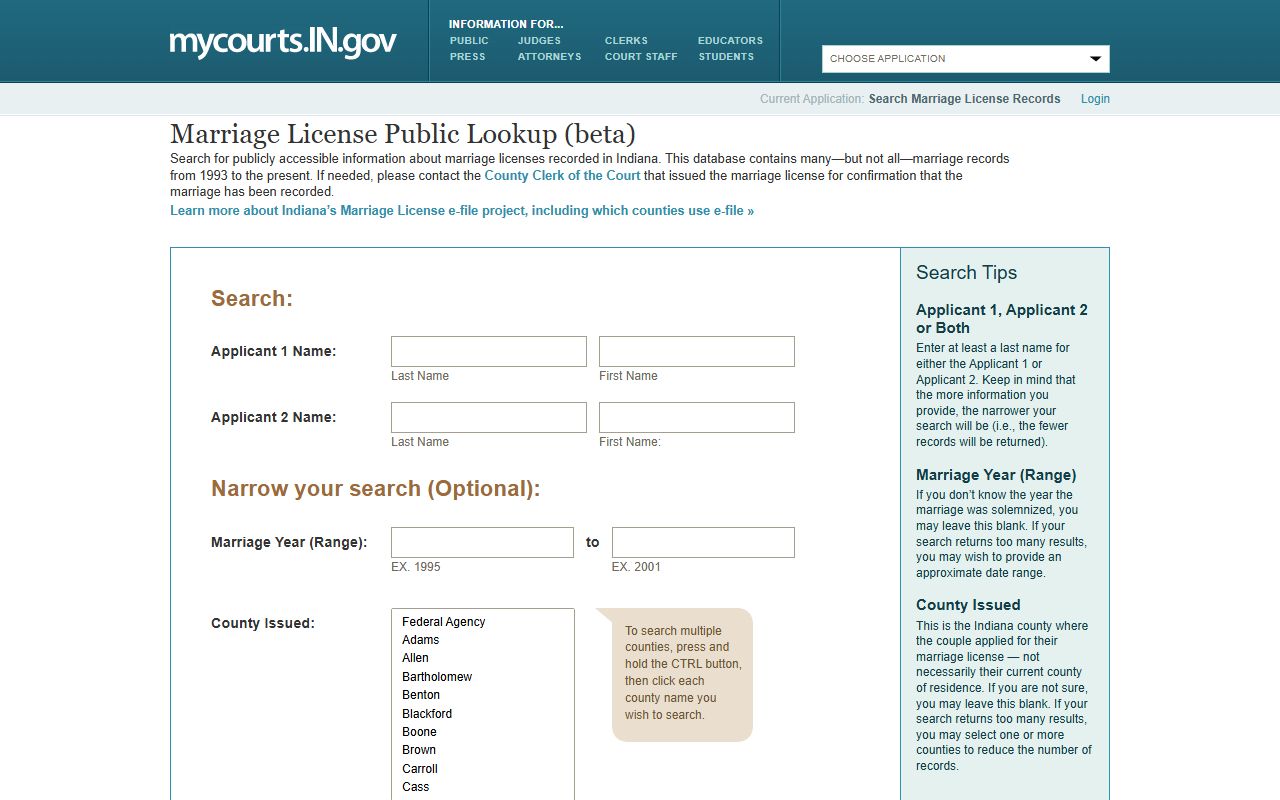
Because the lookup does not cover every record, the issuing county clerk remains the confirmation source for Vermillion County marriage records.
Apply for Vermillion Marriage License
The state marriage service can help applicants begin online, but the local clerk process still requires in-person appearance. Applicants should plan around the clerk office hours and the noon lunch closure. The local fee and copy fee are separate from broader state guidance.
- Start online through the Indiana marriage application service if desired.
- Both applicants appear at the Vermillion County Circuit Court Clerk during office hours.
- Bring a driver license or accepted proof of date of birth and current identity.
- Bring a certified divorce decree or death certificate if either applicant was previously married.
- Pay the local license fee and any certified-copy fee needed.
- Use the license within 60 days and arrange the ceremony outside the clerk office.
The Indiana Judicial Branch marriage-license service image assigned to this page comes from Indiana's official marriage-license guidance.
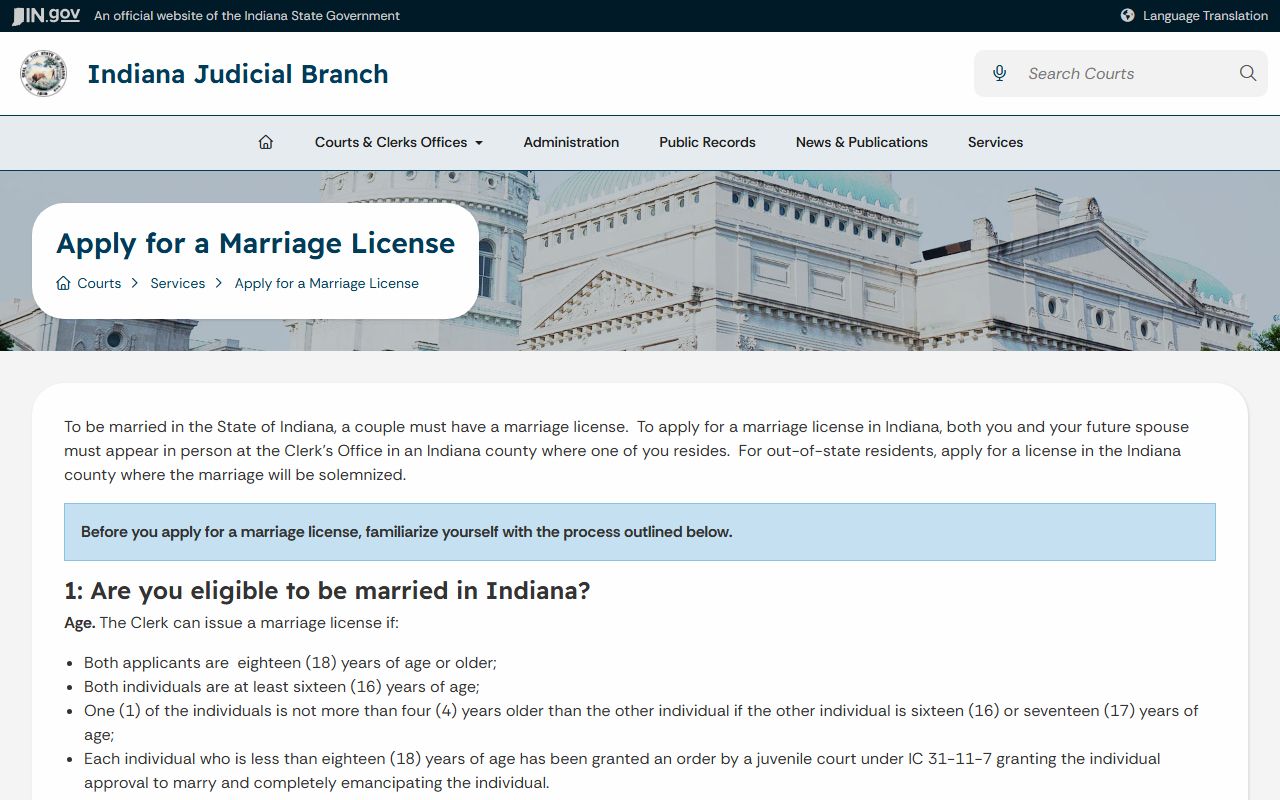
Use the state service for eligibility and application guidance, then use the Vermillion clerk for local appearance, fee, and certified-copy needs.
Vermillion Marriage Application Fields
Indiana marriage applications collect identity, eligibility, prior-marriage, Social Security, and parent information. Some items are used for legal eligibility. Parent names, last known addresses, and birthplaces support genealogical reporting to the Indiana State Library.
| Requirement or field | Required | Notes |
|---|---|---|
| Applicant identity and date of birth | Yes | Accepted proof can include birth record, passport, driver license, government ID, immigration record, military record, or court/government record. |
| Both applicants present | Yes locally | Vermillion clerk requires both parties to be present. |
| Social Security number information | Yes | Indiana requires SSN information, though the card may not be required. |
| Prior marriage end date | Yes if applicable | Vermillion requires a certified divorce decree or death certificate. |
| Parent information | Yes | Full names, last known addresses, and birthplaces are collected for state reporting. |
Vermillion Marriage and Divorce Fees
Use Vermillion's local fee facts when they are available. The clerk page lists the marriage license fee and certified marriage copy fee. The Vermillion fee schedule lists domestic relations filing amounts, copy costs, and certification costs that can apply to divorce decree copies or court-file documents.
| Item | Amount |
|---|---|
| Marriage license, local Vermillion fee | $25.00 |
| Certified marriage copy on clerk page | $4.00 each |
| Copy fee in fee PDF | $1.00 per page |
| Certification cost in fee PDF | $3.00 |
| Domestic relations filing | $177.00, or $205.00 with sheriff service |
Look Up Vermillion Marriage Records
Search newer marriage records through the statewide Marriage License Public Lookup, then confirm uncertain results with the issuing county clerk. The portal says it contains many but not all Indiana marriage records from 1993 to present. Older or missing Vermillion records should be requested from the clerk.
Useful search details include both spouses' names, the approximate application or ceremony date, and Vermillion County as the issuing county if known. Certified copies for legal use should come from the clerk rather than a search screen.
Find Vermillion Divorce Records
Divorce records are court records filed through Vermillion Circuit Court and maintained through the Circuit Court Clerk. They are not searched in the marriage-license lookup. Use MyCase party search or case-number search for public divorce case status, then request copies from the clerk if documents are not linked online.
A divorce file can include a petition, summons, appearances, temporary orders, financial declarations, custody or parenting-time orders, settlement agreements, decree, and child-support orders. Some child, financial, protective, and personal information may be restricted or redacted under Indiana access rules.
The family-law image assigned to this page comes from Indiana Code Title 31, the state law title that includes family and juvenile provisions.
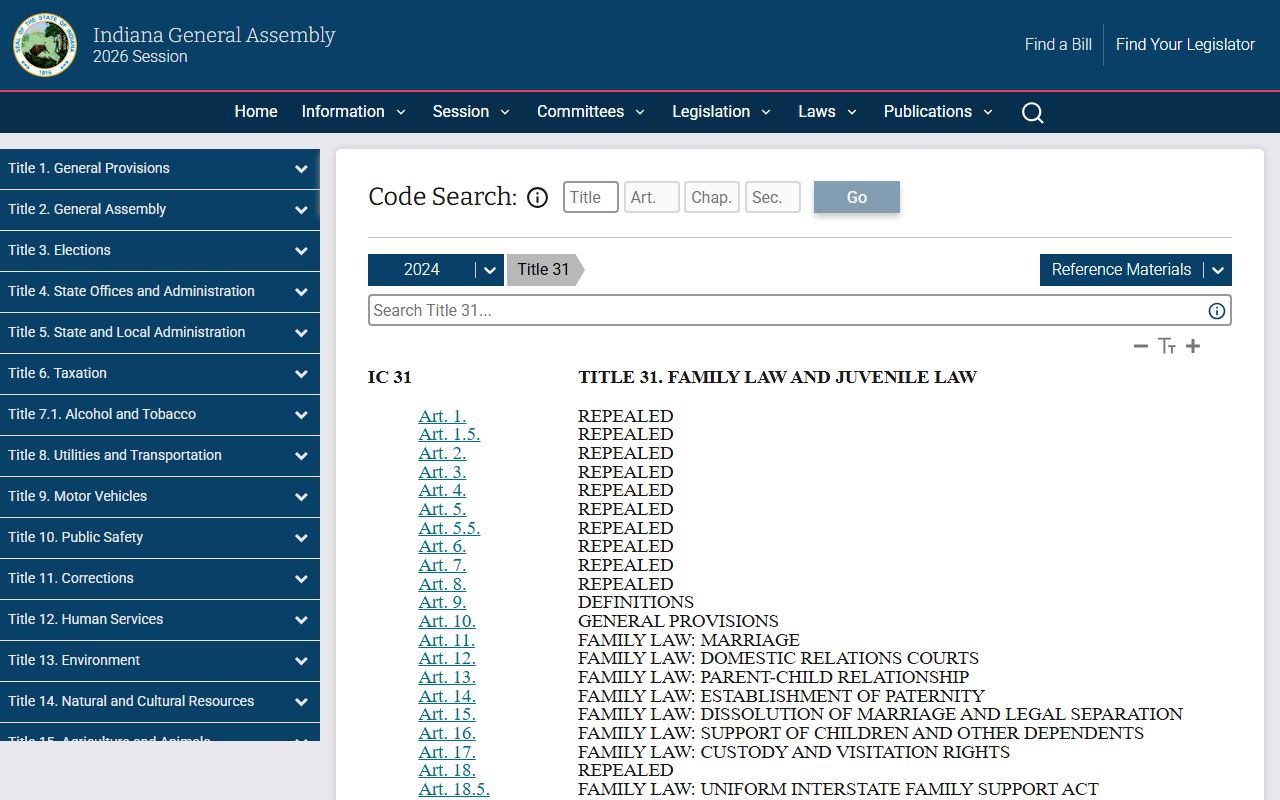
That legal backdrop explains why divorce docket information may be public while some attachments or child-related details are not.
Certified Marriage and Divorce Copies
Certified copies should come from the office that holds the record. For a Vermillion marriage license, contact the Circuit Court Clerk. For a divorce decree, identify the dissolution case in MyCase if possible, then request the decree or order from the clerk. Provide names, approximate date, case number if known, and whether certification is required.
Use the county public-records request form when a record is not easy to identify online. Route the request to the Clerk's Office and describe the requested record with enough detail for staff to locate it. Copy fees may be due before copies are released.
Federal Courts Do Not Divorce
Federal court coverage is separate from Vermillion County marriage and divorce records. 28 U.S.C. 94 maps Indiana federal judicial districts.
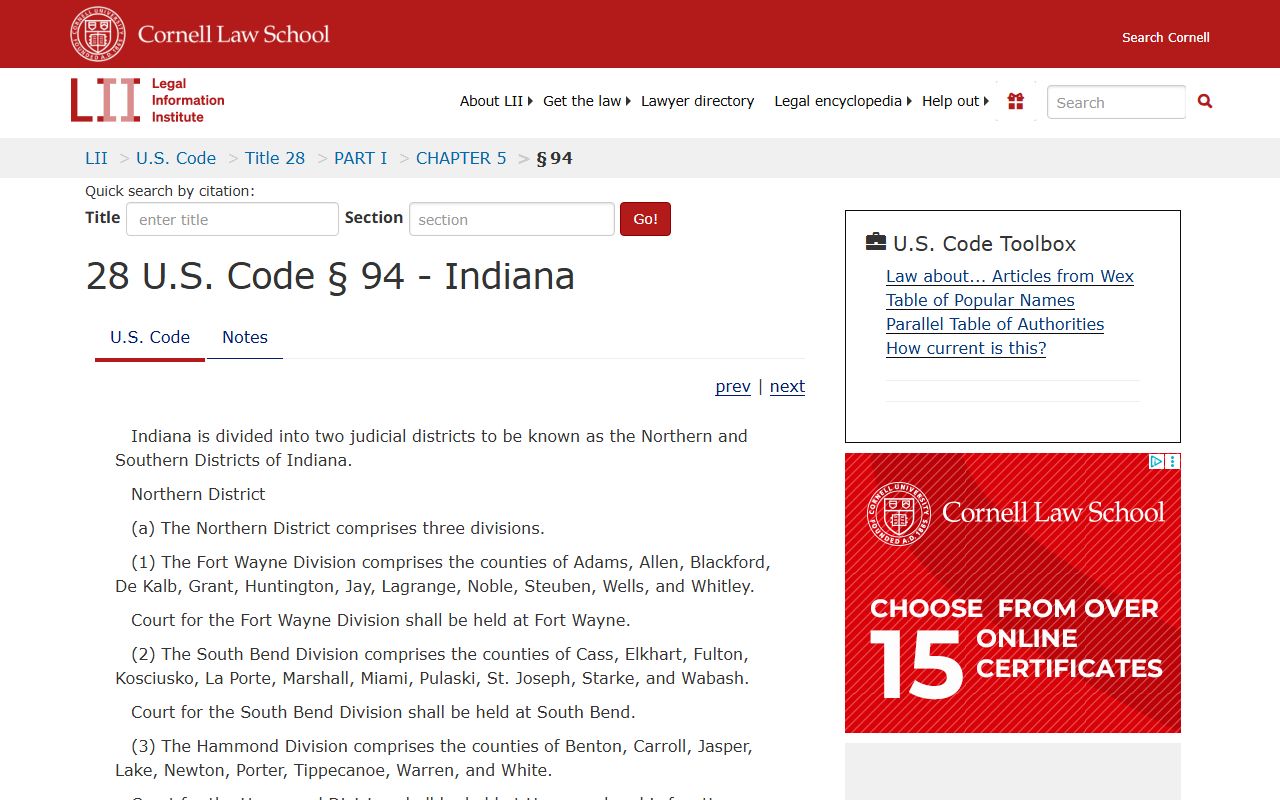
Federal district boundaries may matter for federal cases, but Vermillion County divorce decrees and marriage licenses are local and state court or clerk records.
Restricted Family Record Details
Marriage license records are more open than many divorce-file details, but even marriage searches should be confirmed with the issuing clerk when a legal copy is needed. The statewide lookup is a helpful search tool, not the final certified record. It also warns that it covers many, but not all, Indiana records from 1993 forward.
Divorce files can be partly public and partly restricted. MyCase may show case number, party names, case type, filing date, status, hearings, and some orders. It may not show sensitive financial exhibits, Social Security numbers, minor-child information, protected addresses, sealed materials, or confidential attachments. Indiana family and juvenile law, court-access rules, and case-specific orders can all affect what appears online.
For a certified divorce decree, identify the dissolution case before contacting the clerk. If the case number is unknown, search by party name first. If the case is too old for online display or the document link is missing, give the clerk both names, approximate year, and the specific decree or order requested. The county public-records form can also be routed to the Clerk's Office.
Marriage Record vs Divorce File
A marriage license record documents the legal authority to marry and the recorded marriage information after return. It is kept through the clerk and may be searchable through the state marriage lookup for many newer Indiana records. A certified marriage copy is usually a short clerk-issued record, not the same thing as a full court case file.
A divorce file is different because it is a court case. It may include pleadings, summons, hearings, support orders, custody terms, settlement terms, decree entries, and later modification or enforcement filings. A divorce decree may be only one document within a larger dissolution case. For most legal uses, the decree or a specific order is what the requester needs, not every filing in the case.
Names can also differ across marriage and divorce records. A marriage application may show premarital names, parent information, and prior-marriage information. A divorce case may show married names, former names, and party roles such as petitioner and respondent. When searching, try known name variations and date ranges rather than assuming one spelling will find every record.
Record purpose should guide the request. A genealogy search may need a license lookup, parent details, or an older clerk record. A legal name-change, benefits, passport, or remarriage issue may need a certified marriage copy or certified divorce decree. A custody or support question may need a specific court order rather than the general divorce docket.
When the record is time-sensitive, call the clerk before visiting. The office has a noon lunch closure, and copy fees may need to be calculated before a certified copy is released.