
No Vermillion County Warrant List
No official Vermillion County online active-warrant search page was located in county or state sources. That finding controls the search path. The sheriff page describes the sheriff's law-enforcement and court-service role, but it links to public-records requests, tips, sheriff sales, and sex-offender resources rather than a public active-warrant roster. The county homepage also says the sheriff serves warrants, subpoenas, and process, and may levy property when tax warrants command collection.
The practical chain is sheriff first for law-enforcement warrant guidance, then the court or clerk for the underlying case, then Clinton City Court when the issue began as a local traffic ticket. If records are not available by phone, use the county public-records request form and route it to Sheriff for sheriff-held records or Clerk's Office for court-held records. MyCase can show docket events, bond, missed hearings, and case status, but it should not be treated as real-time warrant confirmation.
The county sheriff-sale image below comes from the official Vermillion County Sheriff's Office sheriff sale page, which is a sheriff civil-process resource, not an active-warrant list.
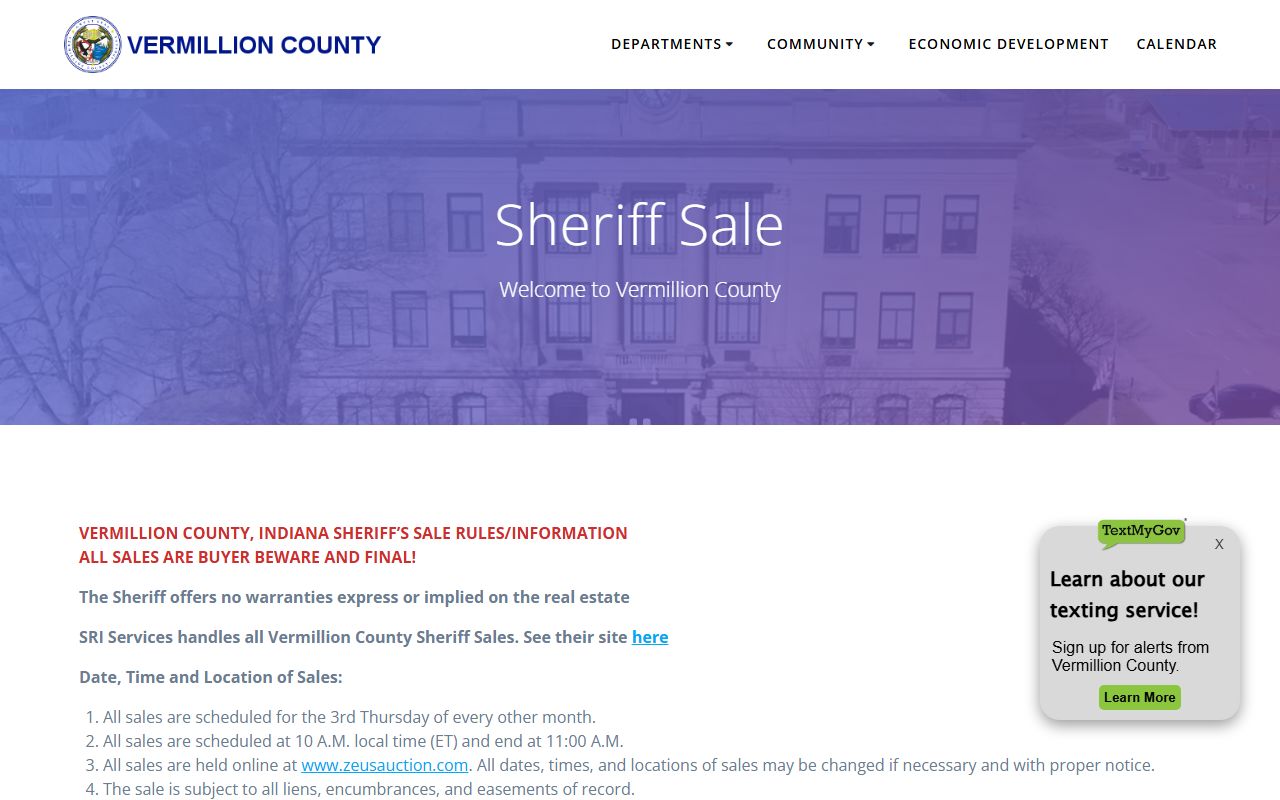
That distinction matters because sheriff civil-process pages may involve liens, levy, or sale notices without providing arrest-warrant names.
Vermillion County Warrant Fallbacks
Start with the office most likely to hold the current status. The Vermillion County Sheriff's Office is at 1888 S. State Road 63, Hillsdale, IN 47854, and the sheriff page lists (765) 492-3838. The sheriff tip/contact page also lists (765) 492-3737, 492-3838, 665-0142, and 832-7785. Use those lines for custody or warrant guidance when immediate status matters.
- Call the Vermillion County Sheriff's Office for current warrant or custody guidance.
- Search the underlying case in Indiana MyCase for hearings, bond, failure-to-appear entries, and disposition.
- Contact the Vermillion Circuit Court or Circuit Court Clerk for bench warrants, body attachments, and court-held case documents.
- Call Clinton City Court at (765) 832-9444 if the warrant may stem from a traffic-ticket matter processed there.
- Use the county public-records request form if a releasable sheriff or court record must be requested in writing.
Public-records requests should be specific. Give the full name, date of birth if appropriate, case number if known, warrant type if known, date range, and the office that may hold the record. Indiana's Access to Public Records Act gives a general right to inspect or copy public records, but law-enforcement, confidential, sealed, and privacy-based limits can still apply.
Vermillion County Sheriff's Office
1888 S. State Road 63
Hillsdale, IN 47854
(765) 492-3838
Vermillion Circuit Court Clerk
255 S. Main Street
Newport, IN 47966
(765) 492-5350
The sheriff and clerk answer different parts of the same problem. The sheriff may know whether a warrant has been served or whether a person is in custody. The clerk or court can help with the underlying case, court dates, docket entries, and copies of public court documents. Clinton City Court should be used when the issue stems from a traffic ticket processed by that court rather than a Circuit Court criminal case.
Vermillion County Warrant Types
Different warrant types have different offices, search paths, and public-access limits. A criminal arrest warrant is not the same as a search warrant. A tax warrant is not the same as a bench warrant. Vermillion County official sources identify sheriff service duties, traffic-ticket routing through Clinton City Court, and the possibility of body attachments in small-claims or show-cause settings.
| Type | What It Means | Likely Channel |
|---|---|---|
| Arrest warrant | Order to bring a person before court in a criminal matter. | Sheriff, court, MyCase case record |
| Bench warrant | Issued by a judge after a missed hearing, failure to appear, probation issue, or contempt. | Circuit Court, clerk, sheriff |
| Body attachment | Small-claims manual term for an arrest order after failure to appear at a Rule to Show Cause hearing. | Circuit Court or clerk |
| Search warrant | Authorizes search of a place or property, often restricted until executed or unsealed. | Court or law enforcement |
| Tax warrant | Collection command that may involve levy duties when the Indiana Department of Revenue issues it. | Sheriff, tax agency, court records when filed |
| Traffic failure-to-appear | May arise after a missed local traffic setting or unpaid ticket process. | Clinton City Court, MyCase, clerk |
Note: A public case docket can show a missed hearing or bond entry without proving that an active warrant still exists.
Vermillion County Warrant Records
Because no official Vermillion County active-warrant database was located, there is no verified local search-field table for warrant names. The best available field inventory comes from official fallback channels: sheriff phone, court records, clerk records, City Court traffic records, and public-records requests. Use the following fields as request and verification items, not as a claim that a county warrant website displays them.
| Field | Why It Matters |
|---|---|
| Full name | Core identity field for sheriff, court, and clerk checks. |
| Date of birth | Helps separate people with similar names, though DOB may not display online. |
| Cause number | Connects a bench warrant, body attachment, or charge to the court case. |
| Warrant type | Shows whether the issue is arrest, bench, search, tax, body attachment, or traffic related. |
| Issuing court | Identifies whether the Circuit Court, Clinton City Court, or another court must be contacted. |
| Bond amount or type | May affect release options after arrest or voluntary surrender. |
| Service or return status | Shows whether a warrant was served, recalled, quashed, returned, or remains unresolved. |
Use official staff for final status. A sheriff or clerk can tell a requester whether the public-facing docket is enough, whether a certified copy is needed, or whether legal counsel should contact the court first.
MyCase can still be useful. It may show the criminal, infraction, small-claims, or contempt case tied to the warrant issue. Look for missed hearings, bond changes, a rule-to-show-cause entry, a recalled warrant entry, or a new hearing date. Those entries help explain the history, but they do not replace a live warrant check. A warrant can be recalled before the public display updates, or a new warrant can exist before a user notices the docket entry.
What To Do For Warrants
An outstanding warrant can lead to arrest. Do not rely on a general web search, a stale case result, or a third-party page. Vermillion County does not have a located official public active-warrant list, so the safest step is to verify through sheriff or court channels before appearing at a facility or court office.
- Call the sheriff or court before going in person if safety, arrest, bond, or surrender details matter.
- Ask whether the warrant is active, recalled, quashed, served, or tied to another pending case event.
- Ask whether bond is set and whether cash, surety, or court appearance rules apply.
- If the issue is traffic related, call Clinton City Court before assuming the Circuit Court has the whole file.
- Bring identification if instructed to appear, and ask about medication, property, and release rules before surrender.
- After resolution, check the court docket and confirm that sheriff or court records have updated.
Important: Anyone facing arrest, bond, probation, or contempt should consider legal advice before arranging a surrender.
Public Access To Warrants
Indiana public-records law helps frame warrant access, but it does not make every warrant detail public at all times. The Indiana Code Title 5 access-to-records source includes the Access to Public Records Act, and the county request form cites the requirement that requests identify records with reasonable specificity. Law-enforcement investigatory records, sealed court files, juvenile matters, protected personal information, and unexecuted search-warrant material may be restricted.
The image below comes from the official Indiana access-to-public-records law source and supports the records-request side of a Vermillion County warrant search.
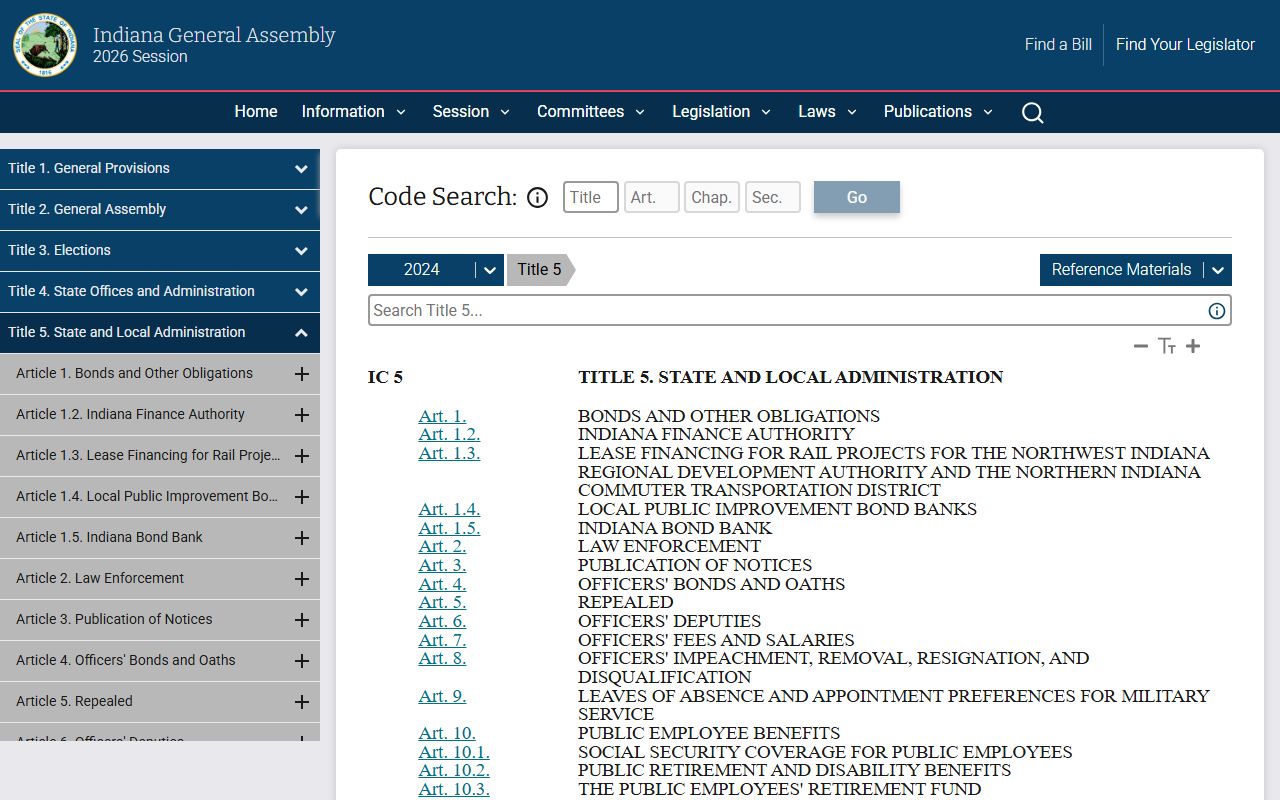
Use that law source with county practice: search MyCase for the case, call the sheriff or court for live warrant status, then submit a specific request if a copy is needed and can be released.
Search warrants need special care. They may involve affidavits, returns, inventories, and law-enforcement facts that are not public before execution or unsealing. Juvenile warrants, sealed records, protected addresses, and personal identifiers can also be excluded or redacted. For federal warrants, Vermillion County offices may not be the record holder. Federal matters can involve federal law enforcement, the U.S. Marshals Service, PACER, or the U.S. District Court for the Southern District of Indiana.
Tips And Custody Checks
The sheriff page links a Send A Tip option, but a tip form is not a warrant search. The sheriff contact guidance says anonymous tips should omit a return email address, while people who want contact should include contact details and describe the tip with as much specific information as possible. Use tip channels for reporting information, not for confirming whether a person has an active warrant.
After an arrest, use jail and custody channels rather than pre-arrest warrant channels. Indiana VINE can provide custody-status notifications, and the county jail or sheriff can answer immediate custody questions. If a warrant led to a new criminal case, the charge and court date may later appear in MyCase, but jail status, bond processing, transport, and release timing should be verified with the jail or sheriff.