
What Probate Covers in Vermillion County
Probate in Vermillion County routes through Vermillion Circuit Court and the Circuit Court Clerk rather than a separate courthouse or stand-alone probate court. The local fee schedule identifies probate and related proceedings, including estates, estate miscellaneous matters, guardianships, and trusts. That local structure is why the correct court name is Probate Division of the Circuit Court.
Common probate records include a will, petition to probate a will, petition for administration, small-estate affidavit, inventory, notice to creditors, claims, accounting, final report, guardianship petition, guardianship orders, and supervised trust filings. Public summaries may appear in MyCase, but certified letters and many older or document-level records come from the clerk.
Indiana Code Title 29 is the state law title for probate matters.
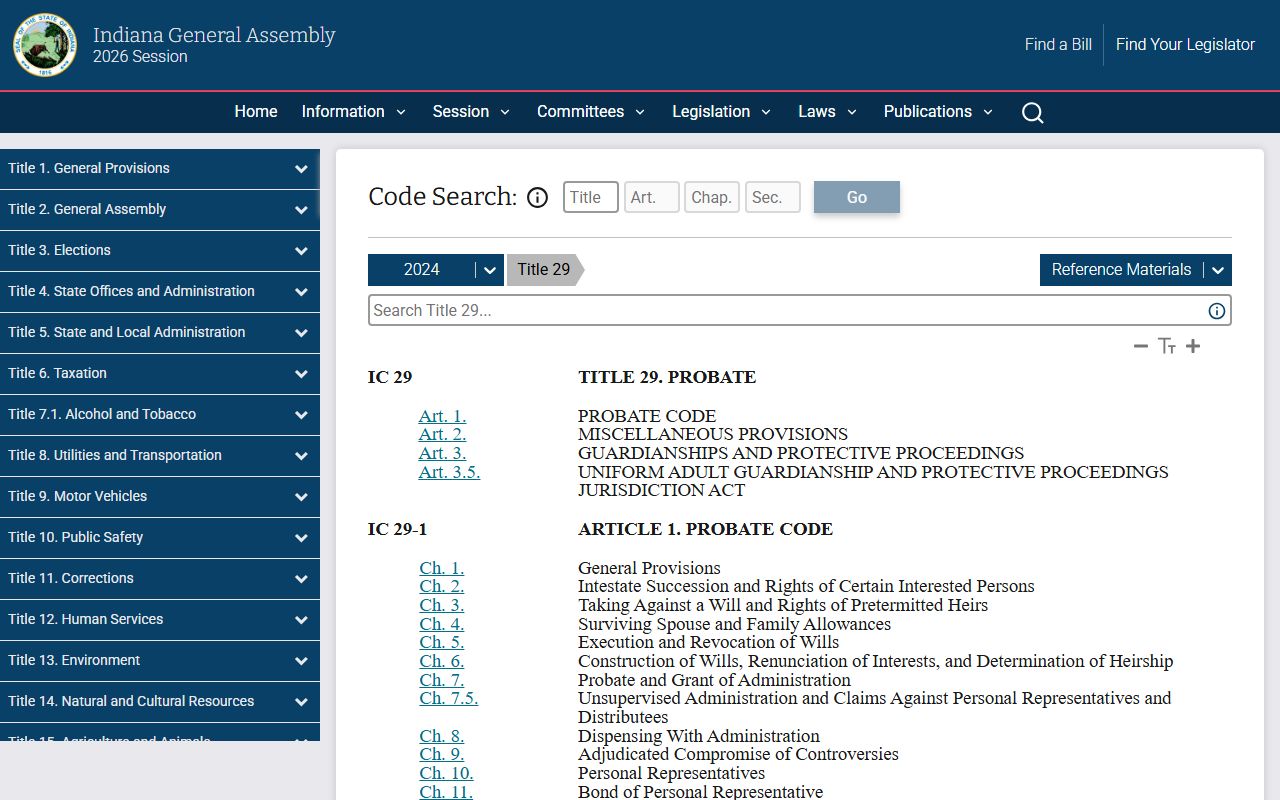
Indiana probate law supplies the statewide framework, while Vermillion County filing and copy access runs through the local court and clerk.
Probate Terms Defined
Probate files use terms that are easy to confuse. These definitions help distinguish the person who died, the person managing the estate, and court-supervised matters for people who need protection.
- Testator
- A person who made a will.
- Executor
- A person named in a will to carry out estate duties after court authority is granted.
- Intestate
- Dying without a valid will, which can require administration under Indiana probate law.
- Guardianship
- A court-supervised case for care or decision-making authority over a protected person.
- Conservatorship
- A related protective arrangement for managing property or financial affairs, where applicable.
How to Search Vermillion County Probate Division of the Circuit Court
Search public probate case summaries in MyCase by party name, estate name, case number, or attorney. For older probate, the Indiana State Library guide says the county clerk has marriage, divorce, probate, and court records from 1824. That historical note is important because not every probate file is online.
- Search MyCase for the decedent, estate, petitioner, guardian, respondent, case number, or attorney.
- If no public record appears, contact the Vermillion County Circuit Court Clerk with names, year, case number if known, and copy needs.
- For older genealogy research, use the Indiana State Library Vermillion County guide and local library leads.
- Request certified letters, orders, or file-stamped copies from the clerk rather than relying on a search result.
| Field or path | Type | Notes |
|---|---|---|
| MyCase party search | Text | Search decedent, estate, petitioner, respondent, or guardian names if indexed. |
| Case number | Text | Probate cause number may include estate, guardianship, or trust class. |
| Attorney search | Text or bar number | Useful when attorney of record is known. |
| Clerk copy request | Request | Provide decedent name, approximate year, case number, and certification need. |
Probate Courts in Vermillion County
Vermillion County has one researched county-level trial court for probate filings. The Circuit Court page lists Judge Chris A. Wrede and says all documents to be considered by the court must be filed with the Vermillion Circuit Clerk. Filing questions and copy questions route to the clerk.
Probate Division of the Vermillion Circuit Court
Judge: Chris A. Wrede
P.O. Box 70, 255 South Main
Newport, IN 47966
(765) 492-5320
Filing and copy questions: Circuit Court Clerk, (765) 492-5350
Probate Filing Fees
The Vermillion fee schedule lists the main probate cost for estates, guardianships, and trusts. Copy and certification costs can apply when a personal representative, heir, guardian, title company, or bank needs a formal court copy.
| Item | Amount |
|---|---|
| Probate estates, guardianships, and trusts | $177.00 |
| Estate miscellaneous | No charge listed in fee schedule |
| Copy fee | $1.00 per page |
| Certification cost | $3.00 |
| Sheriff service fee, if needed | $28.00 |
What Vermillion County Probate Division of the Circuit Court Show
Probate records can show the will, petition, letters testamentary or letters of administration, inventory of estate assets, notices, creditor claims, accountings, final reports, and orders approving sale or distribution. Guardianship records may show petitions, appointment orders, reports, accountings, and other court oversight entries.
The Indiana State Library image assigned to this page comes from the Vermillion County research guide.
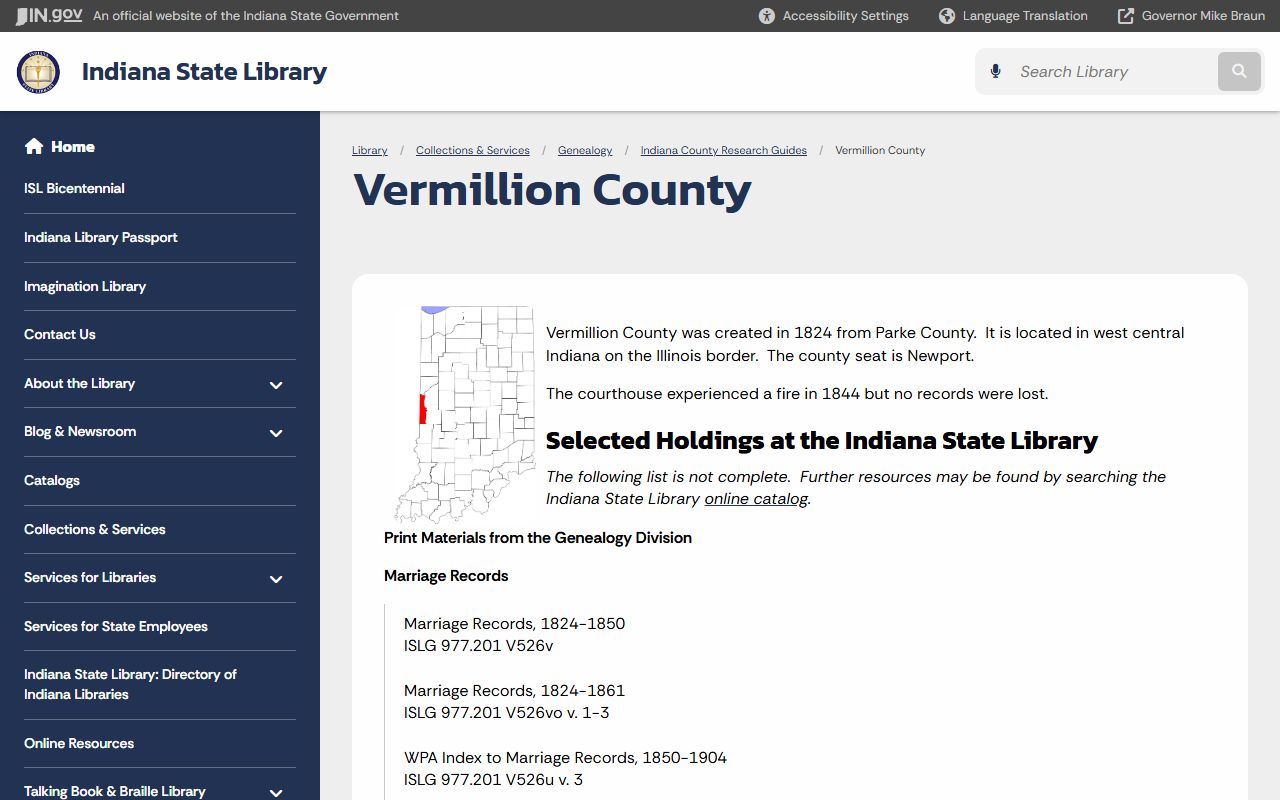
That source is especially useful for older Vermillion County probate records and genealogy research because it identifies the clerk as the historical record holder.
Restricted Probate Division of the Circuit Court
Public access is not the same for every probate file. Guardianship, medical, minor, financial, and protected-person information can be restricted or redacted. Mental health records and adoption-related records are high-restriction categories under the broader research file. MyCase may show only a public case summary, and some documents may require clerk review before release.
Note: For certified letters or guardianship orders, ask the clerk what identifying details and fees are required before arriving.
Vermillion Probate Case Process
A Vermillion probate matter usually starts when a petition is filed through the Circuit Court Clerk. The petition may ask to probate a will, open an intestate estate, appoint a personal representative, appoint a guardian, or supervise a trust issue. The filing fee depends on the case class and any service needs. After filing, the court may issue letters, orders, notices, or hearing dates if the legal requirements are met.
Once an estate or guardianship is opened, the court file may grow over time. A personal representative or guardian may file notices, inventories, creditor information, accountings, reports, and final documents. Those later filings are often the reason a person needs the clerk rather than only a search result. Banks, title companies, heirs, and agencies may ask for certified letters or certified orders instead of a plain copy.
Small-estate options may apply under Indiana Code Title 29, but the research file does not identify a Vermillion-specific small-estate form or local probate manual. A requester should avoid guessing from another county's forms. Use the clerk for local filing questions and the statute or counsel for eligibility questions.
Older Vermillion Probate Records
Historical probate research often follows a different path than a current estate. The Indiana State Library Vermillion County guide says Vermillion County was created in 1824 and identifies the county clerk as holding probate and court records from that date. It also notes the 1844 courthouse fire but says no records were lost, which is useful for genealogy searches.
For older probate records, start with names, approximate death year, residence, family members, and any known estate number. Then contact the clerk or use the State Library guide for historical research leads. The Clinton Public Library Genealogy Department is identified as a further local research lead in the State Library material. Current court copy fees and certification fees can still apply if the clerk supplies copies.
Certified Probate Copy Needs
Different probate users need different documents. A bank may ask for certified letters showing who has authority over an estate. A title company may need an order approving sale or distribution. A family historian may need a plain copy of a will, inventory, or final report. A guardian may need a certified appointment order for a school, medical provider, or agency.
Ask for the exact document by name when possible. If the document name is not known, describe the purpose and the person or estate involved. Useful details include the decedent or protected person's name, approximate date of death or filing, case number, petitioner or representative name, and whether certification is required. The clerk can then identify copy fees and certification fees before release.
Probate access can change within the same case. A public estate docket may have public orders but restricted medical, account, or minor-related attachments. A guardianship case may show that a case exists while withholding sensitive reports. If a record is withheld, the reason may be a court rule, statute, or case-specific order rather than a missing file.
Do not assume the first probate search result is the whole file. A MyCase summary can confirm that a Vermillion probate matter exists, but the working papers, exhibits, letters, and certified orders may still require clerk review. For a current estate, ask whether there are pending hearings or later filings before relying on an older copy.
For genealogy work, a plain copy may be enough. For property, banking, guardianship, or agency use, certification is often the difference between a helpful reference and an accepted legal document.